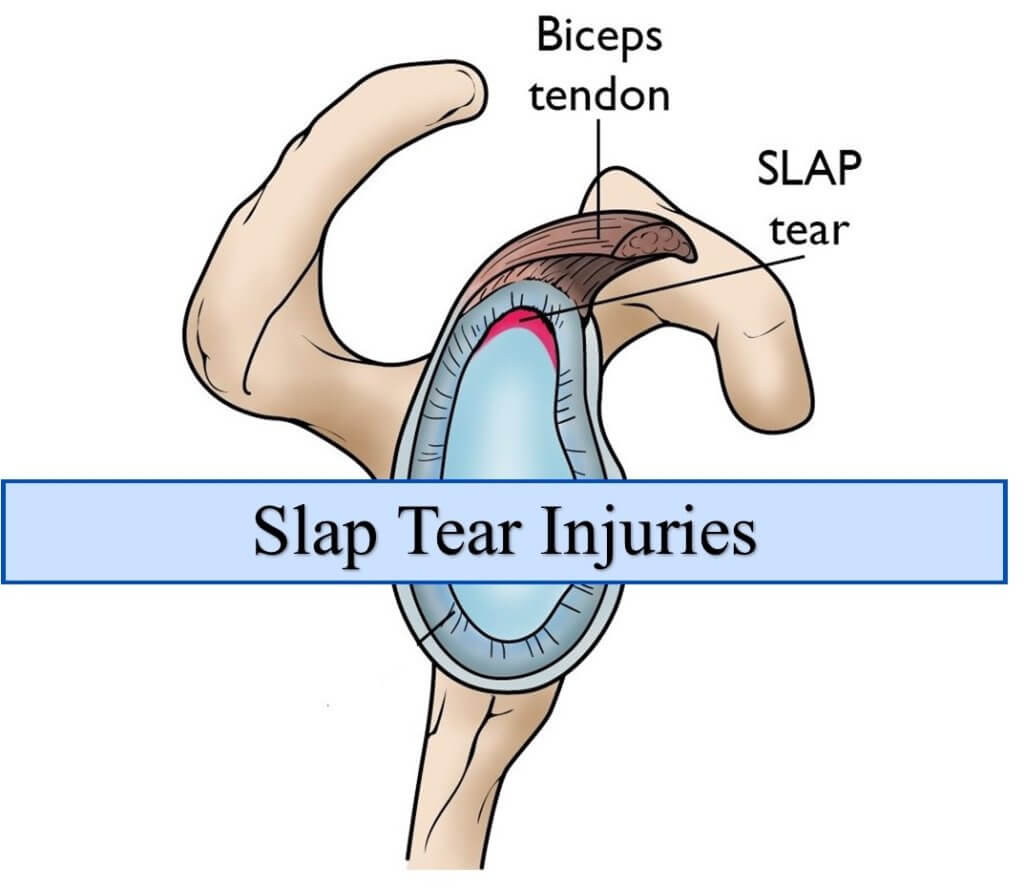
A SLAP tear (Superior Labrum Anterior to Posterior) is an injury to the shoulder’s labrum, a fibrocartilaginous structure that deepens the shoulder socket and provides stability to the joint. The tear occurs at the top of the labrum where the biceps tendon attaches, affecting both the labrum and the tendon.
Causes of SLAP Tears
SLAP tears can result from :
Acute Injuries : A sudden trauma, such as a fall or a direct blow to the shoulder.
Overuse : Repetitive overhead activities, like throwing or swimming, can lead to gradual wear and tear.
Biceps Tendon Injury : A tear in the biceps tendon can lead to secondary damage to the labrum.
Treatment Options
Treatment for a SLAP tear may include :
Conservative Management :
Rest : Avoiding activities that exacerbate symptoms.
Physical Therapy : Exercises to strengthen shoulder muscles and improve flexibility.
Medications : Non-steroidal anti-inflammatory drugs (NSAIDs) for pain relief.
Injections :
Corticosteroid Injections : To reduce inflammation and pain in the shoulder joint.
Surgical Options :
Arthroscopic Surgery : Minimally invasive procedure to repair the torn labrum and biceps tendon. Surgery may involve reattaching the labrum to the shoulder socket or removing the damaged tissue.
SLAP tear F&Q's
A SLAP tear (Superior Labrum Anterior to Posterior) is an injury to the shoulder's labrum, specifically at the top where the biceps tendon attaches. It can cause pain, weakness, and instability in the shoulder joint.
SLAP tears can occur due to acute injuries (like falls), overuse from repetitive overhead activities (such as throwing or swimming), or as a secondary injury from biceps tendon tears.
Common symptoms include:
Deep shoulder pain, especially during overhead activities.
Weakness in the shoulder, making it difficult to lift or rotate the arm.
Clicking or popping sensations in the shoulder.
Limited range of motion and stiffness.
Diagnosis typically involves:
A thorough medical history and physical examination.
Special tests conducted by a healthcare provider to assess shoulder function.
Imaging tests, such as MRI, to visualize the labrum and confirm the diagnosis.
Treatment options include:
Conservative management: Rest, physical therapy, and medications like NSAIDs.
Injections: Corticosteroid injections to relieve pain and inflammation.
Surgery: Arthroscopic surgery to repair the torn labrum and biceps tendon if conservative treatments are ineffective.
Recovery time varies based on the severity of the injury and treatment approach. Conservative treatments may take weeks to months, while surgical recovery can take 4 to 6 months or longer, depending on rehabilitation progress.