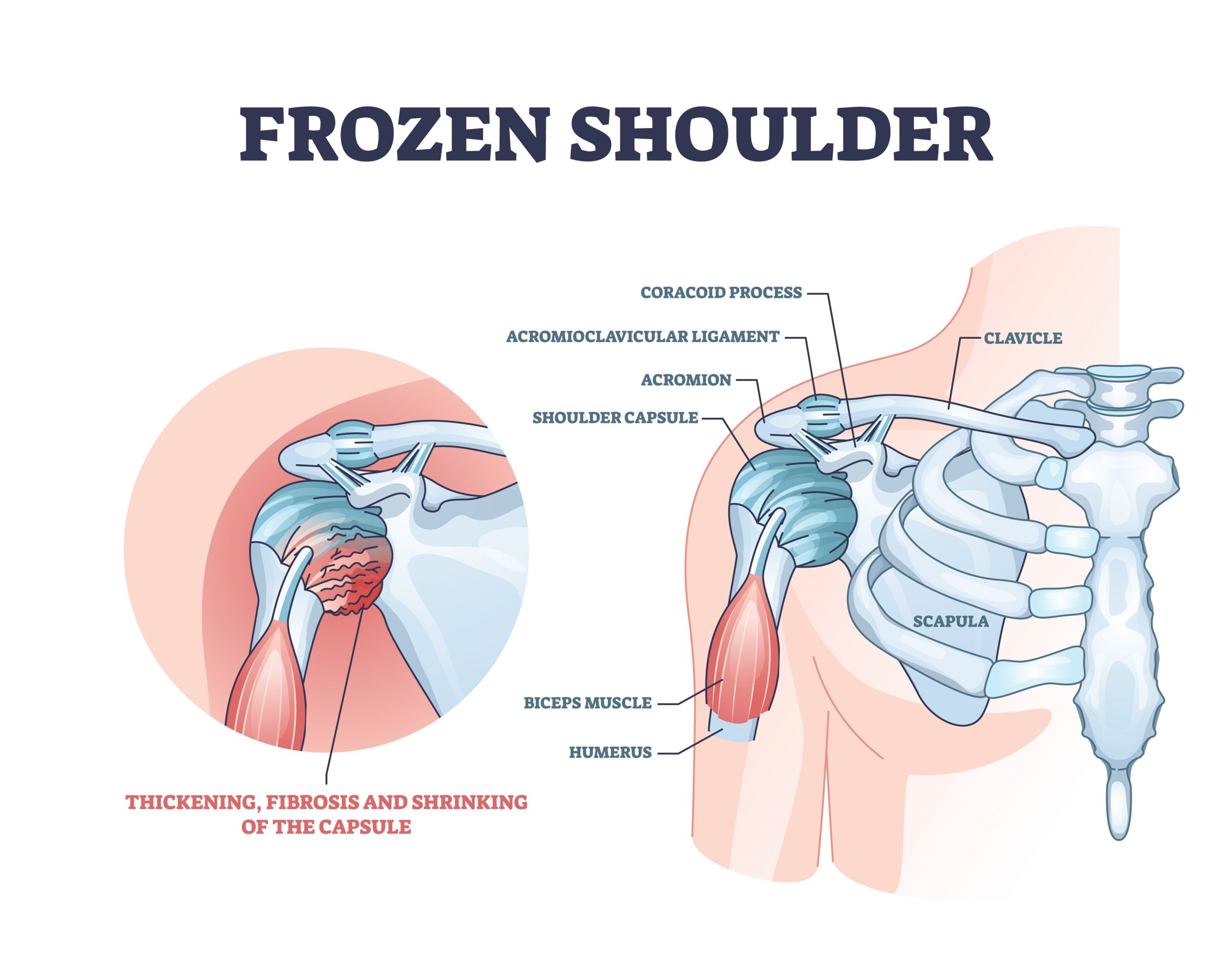
Frozen shoulder, medically known as adhesive capsulitis, is a condition characterized by stiffness and pain in the shoulder joint. It typically develops slowly and can last for months to years, significantly impacting a person’s ability to perform daily activities.
Anatomy of the Shoulder Joint
The shoulder joint is a complex structure involving:
Bones: The humerus (upper arm bone), scapula (shoulder blade), and clavicle (collarbone).
Muscles and Tendons: The rotator cuff muscles and their tendons surround the shoulder, providing stability and facilitating movement.
Capsule: A fibrous tissue surrounding the shoulder joint that contains synovial fluid, allowing for smooth motion.
Causes of Frozen Shoulder
The exact cause of frozen shoulder is often unknown, but several factors may contribute to its development, including :
Injury or Trauma : A shoulder injury can lead to immobilization, increasing the risk of frozen shoulder.
Medical Conditions : Conditions such as diabetes, thyroid disorders, Parkinson’s disease, and heart disease are associated with a higher incidence of frozen shoulder.
Age and Gender : It commonly occurs in people between the ages of 40 and 60 and is more prevalent in women.
Symptoms
Pain : Aching pain in the shoulder that may radiate to the upper arm and worsens with movement.
Stiffness : Limited range of motion in the shoulder joint, making it difficult to perform everyday activities like reaching, lifting, or dressing.
Night Pain : Discomfort that may interfere with sleep, especially when lying on the affected side.
Frozen Shoulder F&Q's
Frozen shoulder, or adhesive capsulitis, is a condition characterized by stiffness and pain in the shoulder joint, resulting from inflammation and thickening of the shoulder capsule.
The exact cause is often unknown, but it may develop after shoulder injury, surgery, or prolonged immobility. Certain medical conditions, like diabetes and thyroid disorders, can increase the risk.
Diagnosis typically involves a physical examination to assess pain and range of motion. Imaging tests like X-rays or MRIs may be conducted to rule out other conditions.
Recovery varies, but most individuals see improvement within 6 months to 2 years. Early treatment can help speed up the recovery process.
While not all cases are preventable, maintaining an active lifestyle, managing underlying medical conditions, and avoiding prolonged immobility after shoulder injuries can reduce the risk.
No, frozen shoulder is not permanent. Most people recover fully or achieve significant improvement in shoulder function with appropriate treatment.