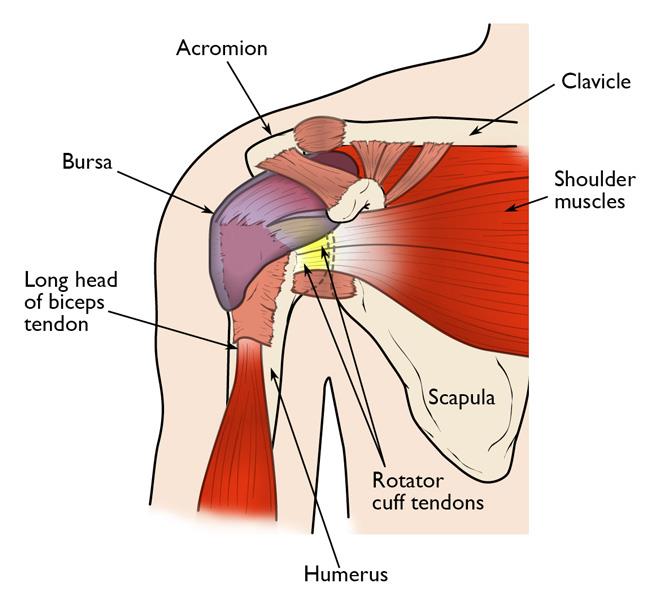
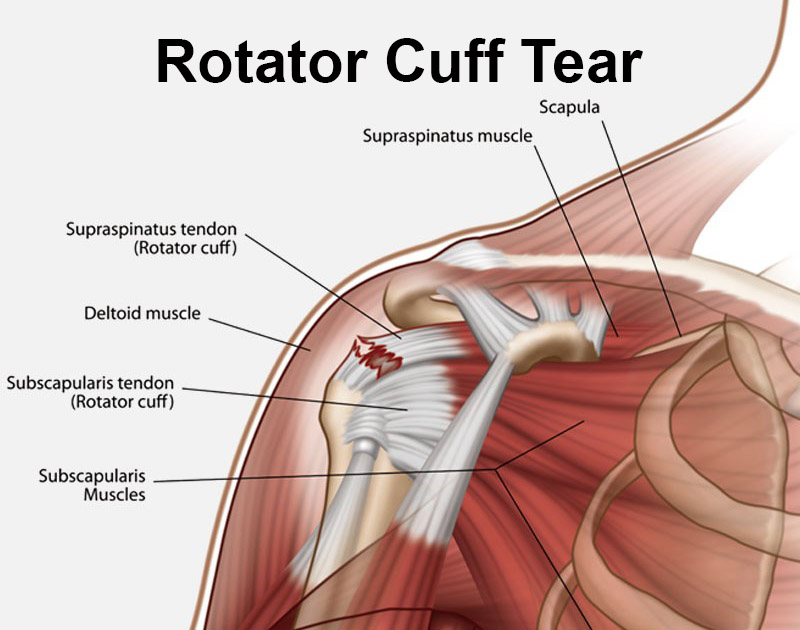
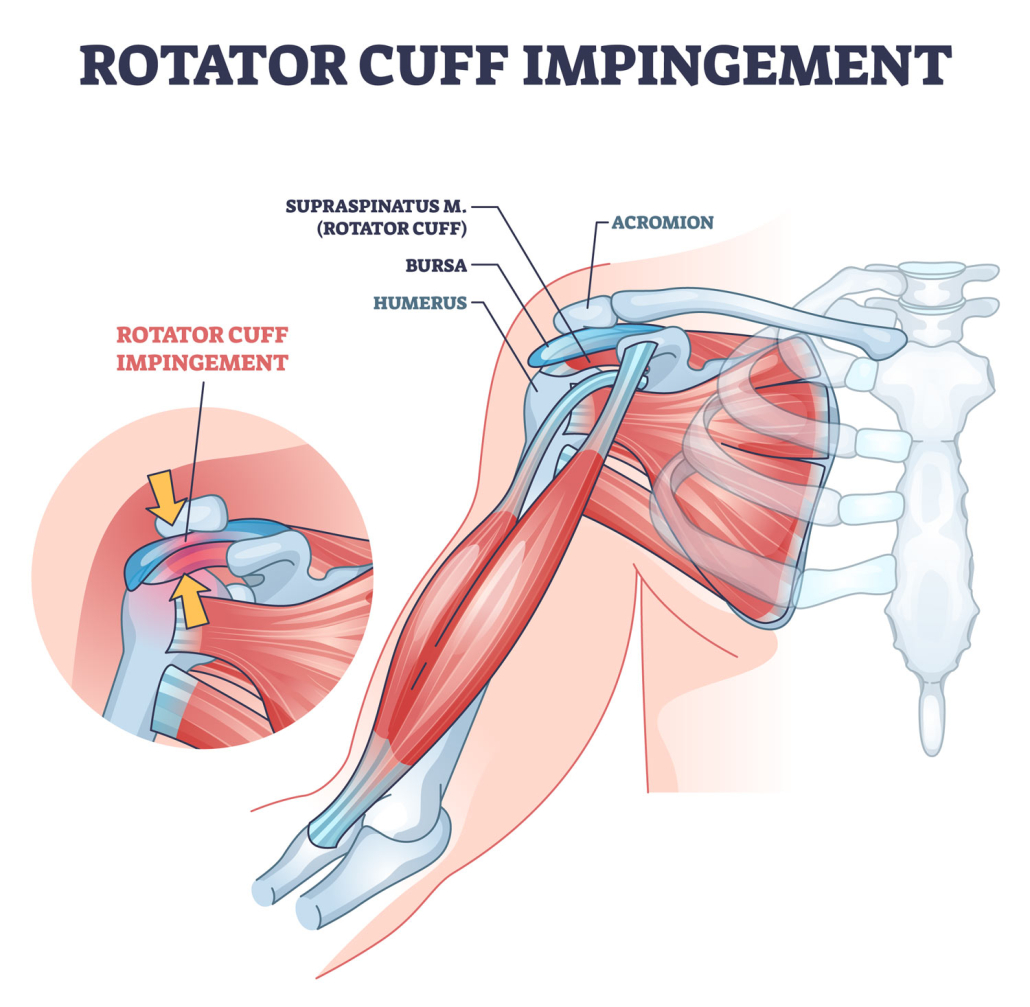
The rotator cuff is a group of four muscles and their associated tendons that stabilize the shoulder joint and enable a wide range of shoulder movements. It plays a crucial role in maintaining shoulder stability and facilitating mobility.
Anatomy of the Rotator Cuff
The rotator cuff consists of four key muscles :
Supraspinatus : Initiates shoulder abduction (lifting the arm away from the body).
Infraspinatus : Responsible for external rotation of the shoulder.
Teres Minor : Assists with external rotation and adduction of the arm.
Subscapularis : Allows for internal rotation of the shoulder.
These muscles work together to stabilize the head of the humerus (the upper arm bone) within the shallow socket of the scapula (shoulder blade) during arm movements.
Treatment Options
Treatment for rotator cuff injuries may include :
Conservative Management :
Rest: Avoiding activities that aggravate the shoulder.
Physical Therapy : Exercises to strengthen the rotator cuff and improve flexibility.
Ice/Heat Therapy : Applying ice or heat to reduce pain and inflammation.
Medications : Non-steroidal anti-inflammatory drugs (NSAIDs) to relieve pain and swelling.
Injections :
Corticosteroid Injections : May be administered to reduce inflammation and pain.
Surgical Options :
Arthroscopic Surgery : Minimally invasive procedure to repair torn tendons or relieve impingement.
Open Repair : Traditional surgery for larger tears or more complex issues.
Recovery and Rehabilitation
Recovery from rotator cuff injuries varies based on the severity of the injury and the chosen treatment. A structured rehabilitation program, including physical therapy, is crucial for restoring shoulder strength and function.
Rotator Cuff F&Q's
The rotator cuff is a group of four muscles and their tendons that stabilize the shoulder joint and enable a wide range of shoulder movements, including lifting and rotating the arm.
Rotator cuff injuries can result from acute trauma (like a fall) or chronic wear and tear from repetitive overhead activities, such as throwing or lifting.
Common symptoms include:
Pain in the shoulder, especially during overhead movements.
Weakness in the arm or difficulty lifting it.
Limited range of motion and stiffness.
A popping or crackling sensation when moving the shoulder.
Diagnosis typically involves a physical examination to assess pain and range of motion. Imaging tests like X-rays, MRIs, or ultrasounds may also be used to confirm the diagnosis and evaluate the extent of the injury.
Recovery time varies depending on the severity of the injury and the type of treatment. Conservative treatment may take several weeks to months, while recovery from surgery can take 4 to 6 months or longer.
Not all rotator cuff injuries require surgery. Many cases can be managed with conservative treatments. Surgical options are typically reserved for severe tears or when conservative management fails to relieve symptoms.